About Sierra Leone
The Republic of Sierra Leone — a West African nation of remarkable beauty, rich culture, and growing opportunity.
Overview
The Republic of Sierra Leone is a sovereign state located on the southwestern coast of West Africa. Bordered by Guinea to the north and northeast, Liberia to the southeast, and the Atlantic Ocean to the southwest, Sierra Leone covers an area of 71,740 square kilometres and is home to approximately 8.6 million people.
Sierra Leone gained independence from the United Kingdom on April 27, 1961 — a date celebrated as Independence Day, the country's most important national holiday. The country became a republic in 1971 and a multiparty democracy was restored in 1991 following years of one-party rule.
The capital city, Freetown, was founded in 1792 by liberated African slaves from Britain, Nova Scotia, and Jamaica — a history that gives the city its name and its unique cultural character. Today, Freetown is a vibrant city and the political, economic, and cultural heart of Sierra Leone.
Geography & Climate
Sierra Leone's terrain varies from coastal mangrove swamps in the west to tropical rainforests in the interior, rising to the Loma Mountains in the northeast — home to Bintimani Peak (1,948 m), the highest point in West Africa west of Mount Cameroon.
The climate is tropical, with a wet season from May to November and a dry season from December to April. The Harmattan wind from the Sahara is common during the dry season, particularly in January and February.
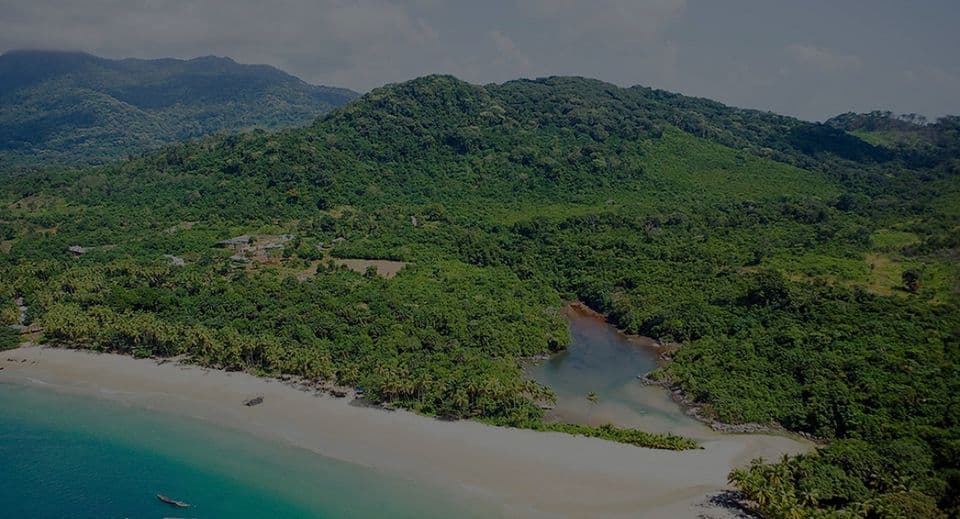
Sierra Leone's coastline stretches 402 kilometres along the Atlantic Ocean, encompassing some of West Africa's finest beaches, including Lumley Beach, River Number Two, and the Banana Islands.
Country Facts at a Glance
| Official Name | Republic of Sierra Leone |
| Capital City | Freetown |
| Independence | April 27, 1961 (from the United Kingdom) |
| Area | 71,740 km² (27,699 sq mi) |
| Population | Approximately 8.6 million (2023 estimate) |
| Official Language | English |
| National Languages | Krio, Temne, Mende, Limba, and others |
| Currency | Sierra Leonean Leone (SLE) |
| Government | Constitutional Republic |
| President | H.E. Julius Maada Bio |
| Vice President | H.E. Mohamed Juldeh Jalloh |
| Parliament | Unicameral — Parliament of Sierra Leone (146 seats) |
| Highest Court | Supreme Court of Sierra Leone |
| National Anthem | High We Exalt Thee, Realm of the Free |
| Religion | Islam (~77%), Christianity (~22%), Indigenous beliefs |
| Time Zone | GMT / UTC+0 (no daylight saving time) |
| Internet Domain | .sl |
| Country Code | +232 |
| Region | West Africa — borders Guinea (north/east) and Liberia (southeast) |
| Coastline | 402 km along the Atlantic Ocean |
Government of Sierra Leone
Executive
President Julius Maada Bio
The President of Sierra Leone is both the head of state and head of government. Elected by popular vote for a maximum of two five-year terms, the President appoints the cabinet and leads the executive branch of government.
Legislature
Parliament of Sierra Leone
The unicameral Parliament of Sierra Leone consists of 146 members elected by proportional representation for five-year terms. Parliament enacts legislation, approves the national budget, and provides oversight of the executive branch.
Judiciary
Chief Justice of Sierra Leone
The judicial branch is independent of the executive and legislative branches. The Supreme Court is the highest court in the land, followed by the Court of Appeal, the High Court of Justice, and subordinate courts throughout the country.
A Brief History
Sierra Leone's coast was known to Portuguese explorers as early as 1462, when Pedro de Sintra charted its mountains. The region became an important source for the slave trade over the following centuries, with thousands of Africans transported across the Atlantic under brutal conditions.
The Province of Freedom was established in 1787 by British abolitionists as a settlement for freed slaves and poor Black people from Britain. In 1792, the Sierra Leone Company established the Colony of Freetown, which was transferred to the British Crown in 1808. The interior became a Protectorate in 1896.
Sierra Leone achieved independence on April 27, 1961, under Prime Minister Sir Milton Margai. The country became a republic in 1971. A devastating civil war from 1991 to 2002 caused widespread destruction and loss of life. Since the restoration of peace, Sierra Leone has made significant strides in rebuilding its institutions and economy.
Official Public Holidays
The following are the official public holidays of the Republic of Sierra Leone. The Embassy observes these holidays in addition to selected U.S. federal holidays.
| Date | Holiday |
|---|---|
| January 1 | New Year's Day |
| February 18 | Armed Forces Day |
| March 8 | International Women's Day |
| Variable (March/April) | Good Friday |
| Variable (March/April) | Easter Monday |
| April 27 | Independence Day — National DayNational Day |
| May 1 | Labour Day (Workers' Day) |
| Variable (Islamic calendar) | Eid ul-Fitr (End of Ramadan) |
| Variable (Islamic calendar) | Eid ul-Adha (Feast of the Sacrifice) |
| Variable (Islamic calendar) | Maulid al-Nabi (Prophet Muhammad's Birthday) |
| December 25 | Christmas Day |
| December 26 | Boxing Day |
Interested in Visiting or Investing in Sierra Leone?
Learn about visa requirements or explore trade and investment opportunities.